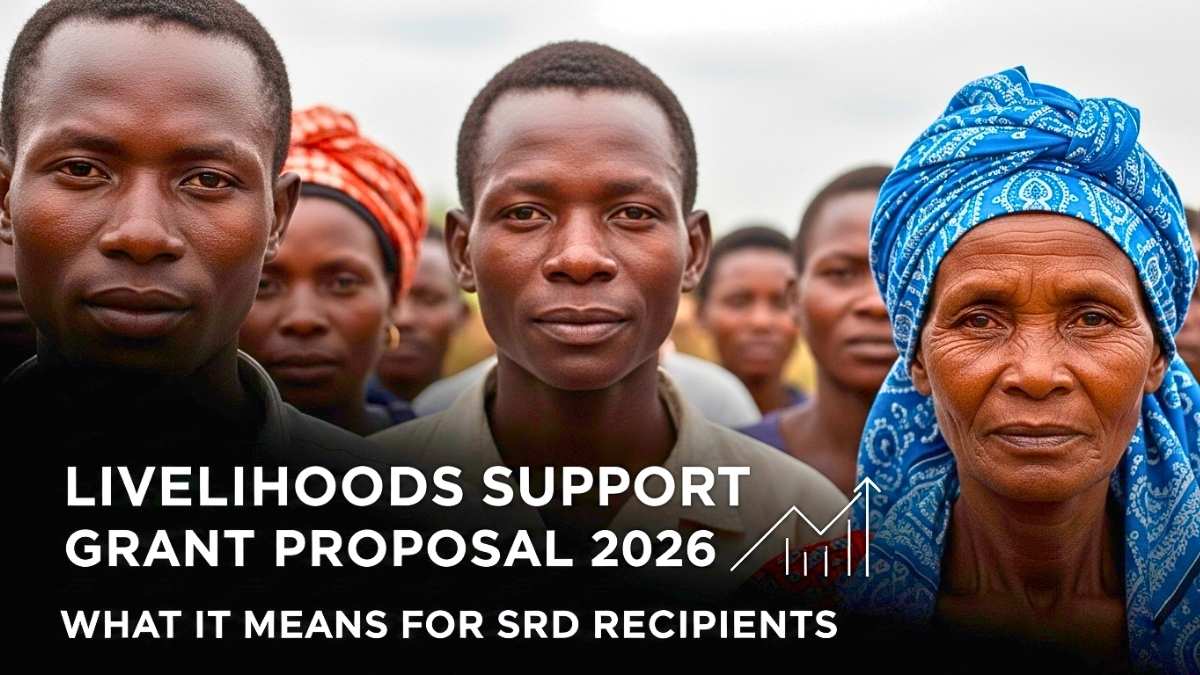
Livelihoods Support Grant Proposal The Livelihoods Support Grant Proposal for 2026 has drawn attention due to its potential impact on individuals currently receiving the Social Relief of Distress (SRD) grant. The proposal is aimed at strengthening income support systems and improving financial assistance for vulnerable households. While still under discussion, it is expected to influence how social support is structured and delivered in the coming year.
Livelihoods Support Grant 2026 Overview and SRD Impact
| Feature | Details |
|---|---|
| Programme Name | Livelihoods Support Grant Proposal 2026 |
| Target Group | SRD Recipients and Low-Income Households |
| Purpose | Enhanced Income Support |
| Focus Area | Social Assistance and Poverty Relief |
| Expected Outcome | Improved financial stability |
| Policy Stage | Proposal Phase |
| Related Programme | SRD Grant (Social Relief of Distress) |
The proposal is expected to build on existing social relief frameworks by introducing more structured and potentially expanded support mechanisms. For SRD recipients, this could mean changes in eligibility criteria, payment structures, or long-term integration into broader welfare systems. However, final implementation details are still subject to government review and approval processes.
One of the key goals of the Livelihoods Support Grant is to improve financial resilience among low income individuals. This includes exploring more sustainable support models that go beyond short term relief. If implemented, it may help reduce dependency on temporary assistance programs by offering more stable income support pathways.

Potential Changes for SRD Beneficiaries
SRD recipients may experience several possible changes depending on how the proposal is finalized. These could include adjustments to grant amounts, revised qualification requirements, or integration into a new consolidated support system. The intention behind these changes is to streamline social assistance and improve efficiency in delivery.
Another possible outcome is improved targeting of beneficiaries. This would ensure that support reaches individuals who are most in need, while reducing administrative delays and improving access to funds. Digital systems may also play a larger role in managing applications and payments.
It is also important to note that SRD remains a temporary relief mechanism. The introduction of the Livelihoods Support Grant could signal a transition toward more structured and long term social assistance planning.

Broader Economic and Social Implications
The proposal reflects ongoing efforts to address unemployment and poverty challenges. By strengthening income support systems, policymakers aim to provide a more stable safety net for vulnerable populations. This can have a positive impact on household stability, local economies, and overall social welfare.
If successfully implemented, the new framework may also improve coordination between different social grant systems. This could reduce duplication and ensure more efficient use of public resources.
Final Verdict
The Livelihoods Support Grant Proposal 2026 represents a potential shift in how social assistance is structured for SRD recipients. While still in the proposal stage, it signals a move toward more sustainable and integrated support systems. Its final impact will depend on policy approval and implementation details, but it has the potential to reshape social relief frameworks significantly.

Disclaimer
This article is for informational purposes only and does not represent official government policy or confirmation of final decisions. Grant structures, eligibility, and payment details may change based on legislative and administrative updates. Readers should refer to official government sources for verified information.
